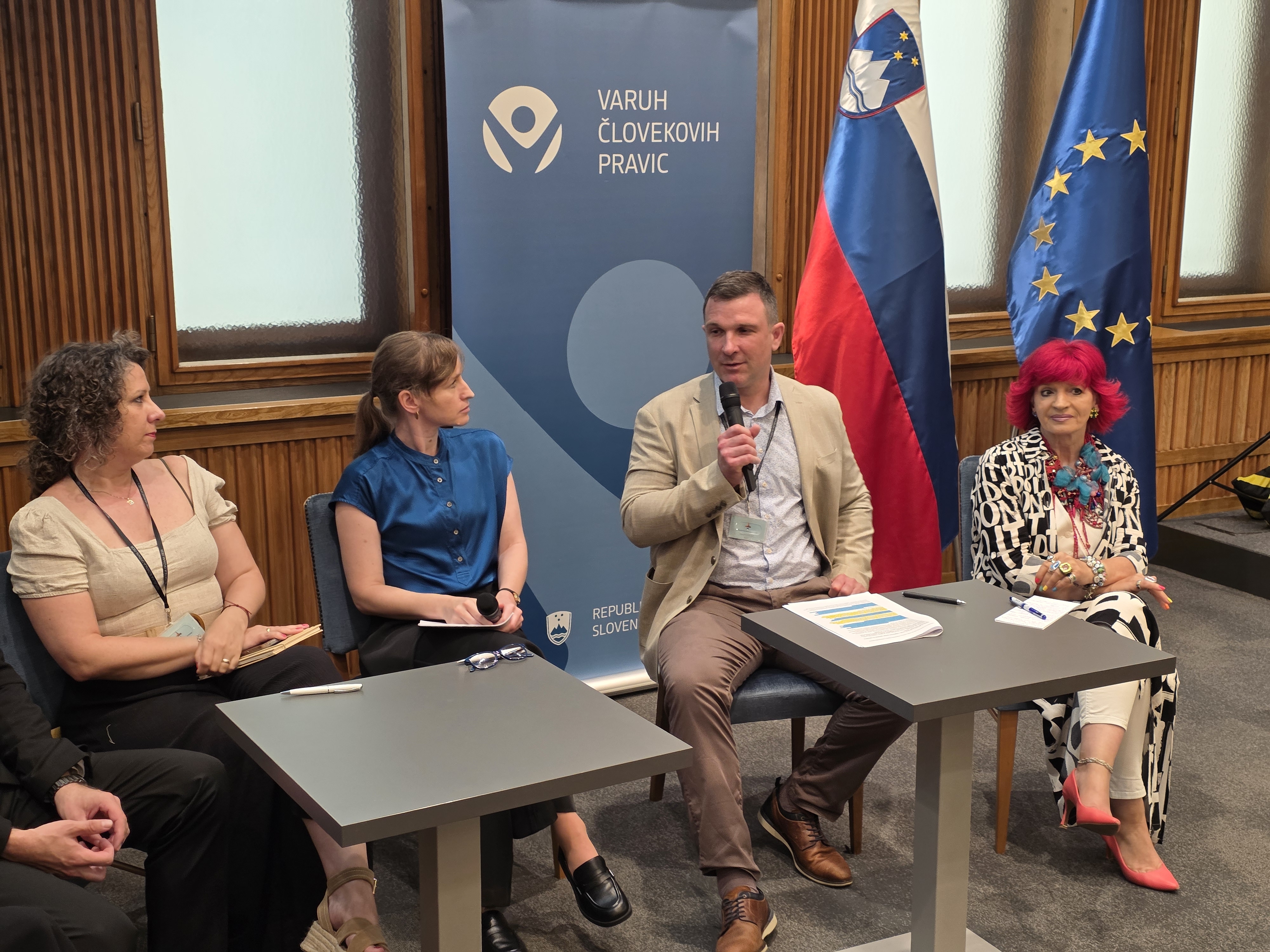
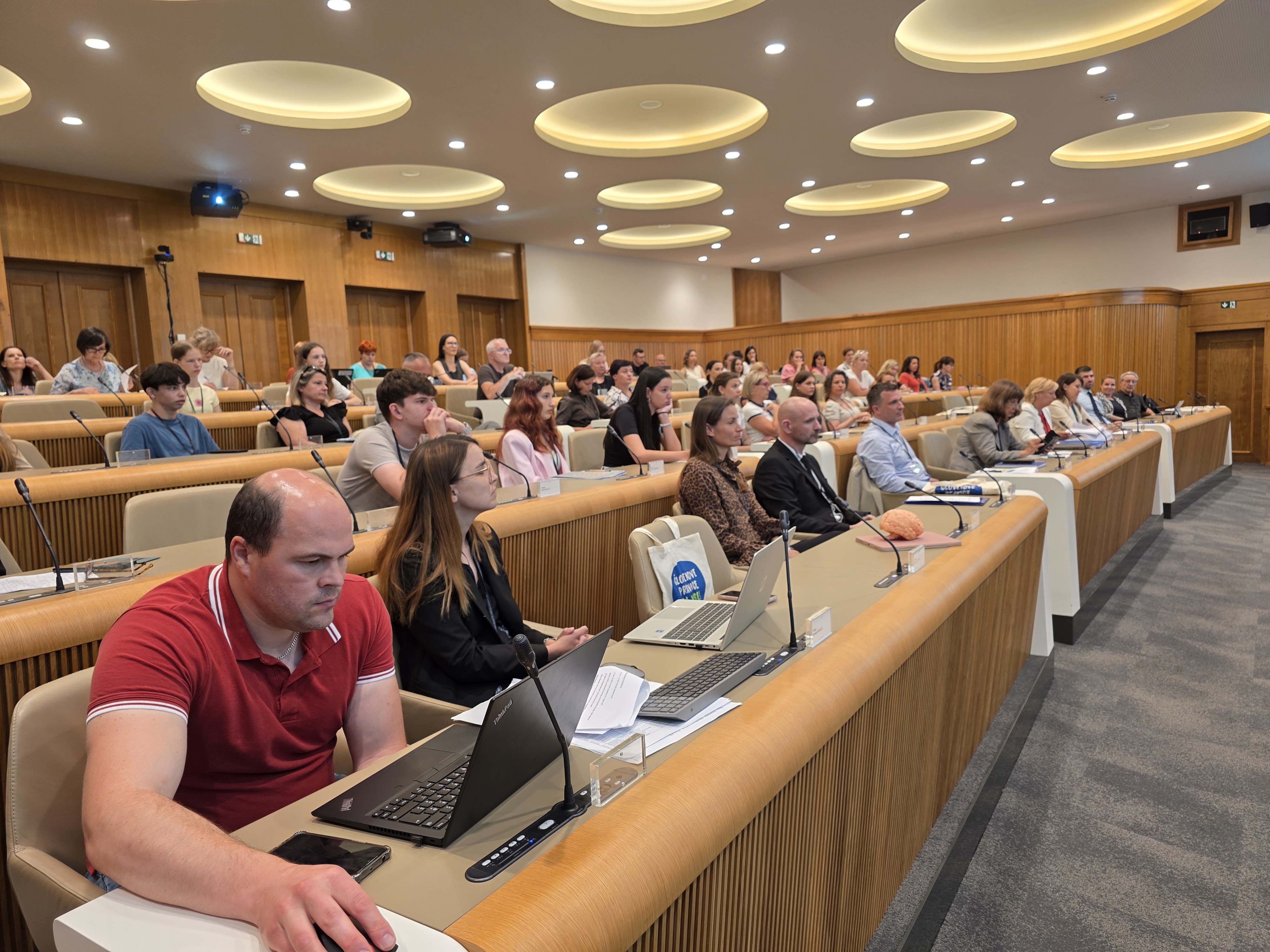
The Human Rights Ombudsman organised a consultation today at the National Council of the Republic of Slovenia entitled ‘The Digital Environment and Children’s Rights: Between New Opportunities and Risks’, in which Martin Hari, Head of the Digital Services Sector at AKOS, also took part in the first panel.
The discussion focused on how the digital environment affects the upbringing of children and young people, what risks it poses, and how to ensure that the digital space supports children’s rights rather than jeopardising them. Among other things, the participants discussed risks to mental health, online violence, digital addiction, exposure to harmful content, and the impact of algorithms and recommendation systems. Particular attention was also paid to the issue of possible restrictions on the use of social media by those under the age of 15.
Martin Hari emphasised that, through the Digital Services Act (DSA) and other legal frameworks, the European Union is already establishing important tools to enhance the safety of users, including minors. Among other things, the DSA addresses content moderation, algorithm transparency, advertising and the obligations of very large online platforms regarding the assessment and management of systemic risks. Article 28 of the DSA is also particularly important, as it requires platforms to take measures to ensure an adequate level of privacy, security and the protection of minors.
“The rules are in place, but for the most part they are new rules that have yet to be properly implemented in practice. Consistent enforcement, based on data and in cooperation with all relevant institutions, will be key. When it comes to protecting children in the digital environment, simple answers are not enough. We need measures that are effective, enforceable and proportionate,” said Hari.
As the digital services coordinator, AKOS sees its role primarily in monitoring current risks, gathering information, cooperating with national stakeholders and reporting to the European Commission and other digital services coordinators.
“As the largest platforms are based in other EU Member States or outside Slovenia, a coordinated pan-European approach is particularly important for effective action. National measures may be important, but when it comes to the largest cross-border platforms, the most effective solutions will be those designed and implemented at European Union level,” emphasised Hari.
One of the key issues discussed at the consultation was the possibility of restricting the use of social media by those under the age of 15. Such proposals stem from a legitimate concern to protect children from harmful content, online violence, exploitation and negative impacts on mental health. However, issues of enforceability, privacy, children’s access to information, digital inclusion and participation must also be carefully considered. Age restrictions alone do not eliminate all sources of risk and must therefore form part of a broader set of measures. Among the possible measures, there is increasing discussion at European level about more reliable age verification, restrictions on addictive features such as infinite scrolling, autoplay and push notifications, and stricter obligations on platforms regarding recommendation systems, advertising and service design. Equally important is the debate on restricting smartphone use, particularly in schools, which some countries are already implementing or considering as a complementary measure.
Hari pointed out in this regard that the issue of children’s safety in the digital environment is not limited to social media. Risks also arise on other websites, in messaging apps, online games, gambling and other digital services. The approach must therefore be comprehensive, cross-sectoral and proactive, rather than merely a reaction to individual crises. An important part of the solution is also the systematic digital literacy training of children, young people, parents, teachers and the wider public.
‘Children must be protected in the digital environment, whilst at the same time being empowered to use it safely, responsibly and creatively. The aim of these measures must therefore not be to exclude children from the digital environment, but to create a safe, stimulating and developmentally appropriate space in which their rights are respected,” Hari added.
AKOS will continue to collaborate with institutions, regulators, experts and organisations working in the field of children and young people, and will strive to develop measures based on data, evidence and a realistic assessment of risks. Only through the coordinated efforts of the state, European institutions, platforms, the professional community, schools, parents and the children themselves will it be possible to ensure a digital environment that enables children to grow up safely and fully realise their rights
