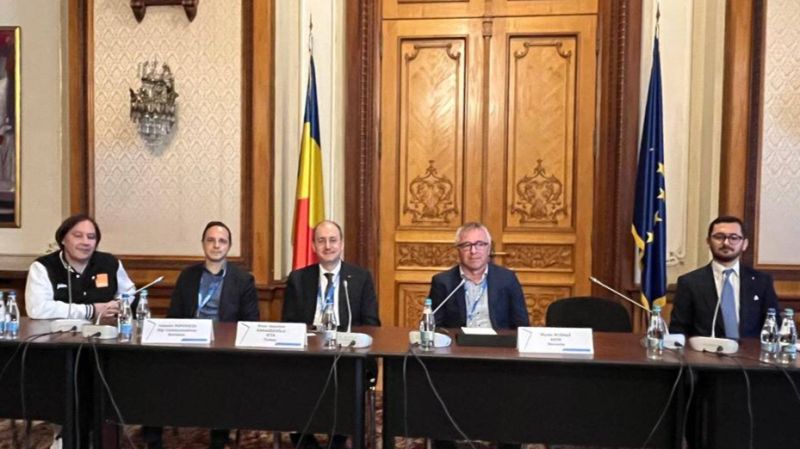
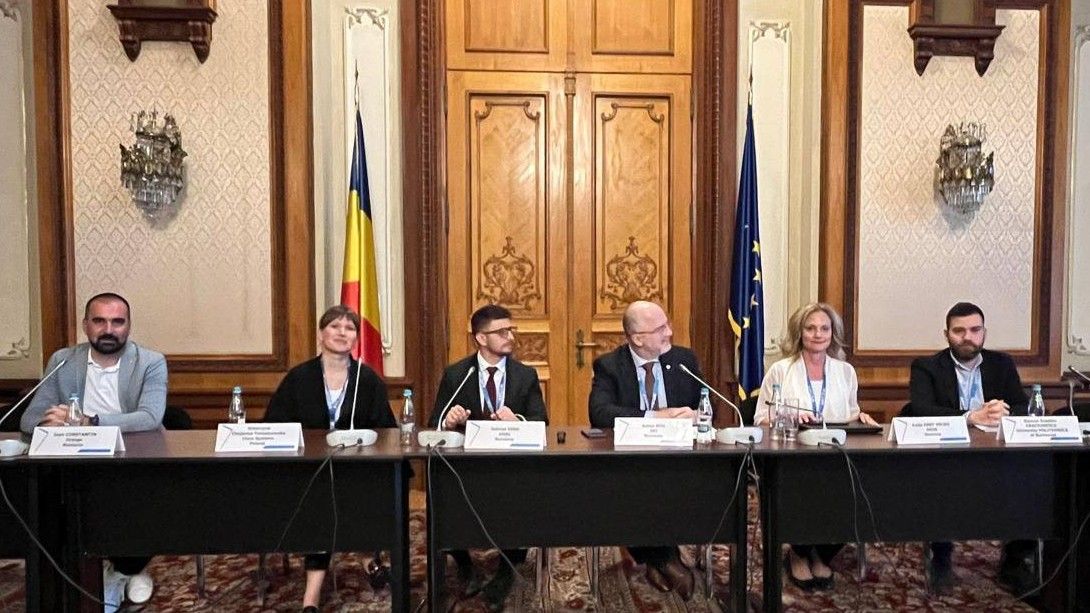
Marko Mišmaš, Director of AKOS and Chair of BEREC, and Katja Kmet Vrčko, Adviser to the Director for International Affairs and Co-Chair of BEREC's Cybersecurity and Resilience Working Group, also spoke at the Digital Communications and Media Forum 2026, which is taking place today and tomorrow in Bucharest.
Their presentations focused on the resilience of communication networks, the security of digital infrastructures, the evolution of the European regulatory framework and the role of new technologies in ensuring secure and reliable connectivity.
Marko Mišmaš pointed out that Europe is entering a crucial period in the development of connectivity, in which investments in fibre networks and the future European regulatory framework will play an important role. He paid particular attention to the proposal for a Digital Network Act (DNA), which will have a significant impact on the future regulation of the European electronic communications market.
"The transition to fully fibre-based networks is inevitable. The only question is how fast it will happen, under what conditions and with what market structure," said Marko Mišmaš.
He also pointed out that Europe must not lose the balance between investment, innovation and maintaining effective competition in the development of digital infrastructure. Regulation will play a key role in ensuring a supportive investment environment, effective competition and the long-term resilience of Europe's communications networks, he said.
"Regulation must remain flexible enough to encourage investment in the networks of the future, while ensuring an open and competitive market for the benefit of users and the economy," he said.
He also stressed the importance of regulatory cooperation at European level in creating a Digital Single Space and in responding to technological and geopolitical change.
Katja Kmet Vrčko, Adviser to the Director for International Affairs and Co-Chair of BEREC's Cybersecurity and Resilience Working Group, stressed in a discussion on digital corridors, network resilience and cybersecurity that "connectivity today is not just a commercial service, it is Europe's strategic infrastructure".
"Today, communication networks support almost all essential services: energy systems, transport, healthcare, financial services, emergency response, public information and warning systems, cloud infrastructures, industrial automation and, of course, a growing number of new services based on artificial intelligence. Secure and resilient connectivity is no longer just a question of securing networks. It is about ensuring society's ability to function even in times of disruption," stressed Katja Kmet Vrčko.
She pointed out that regulators across Europe are also increasingly focusing on the physical resilience of networks, as cyber security alone does not guarantee continuity of services. She cited natural disasters, power supply disruptions, sabotage of physical infrastructure and geopolitical risks as key challenges.
She also highlighted the importance of European cooperation in ensuring the security and resilience of digital ecosystems, particularly in the light of developments in artificial intelligence, network virtualisation, cloud services and other new technologies.
In the context of the debate on AI and new technologies, she also highlighted the role of regulators in ensuring a trustworthy digital transformation.
"A key challenge for all regulators in the coming years will be how to remain agile and technically competent enough to support innovation while ensuring resilience, security and trust in these interconnected digital systems," she said.
