Every year, around 180 countries celebrate Safer Internet Day on Tuesday in the second week of February, this year on 10 February. Just ahead of the Day, The Agency for Communication Networks and Services of the Republic of Slovenia is shedding light on the extent of online shopping and consumer behaviour by publishing the results of its latest survey on online shopping habits, conducted for the third consecutive time in October 2025.
The survey provides a comparison with the results in 2024 and gives insights into the key trends shaping online shopping in the Republic of Slovenia. It provides insights into user behaviour and the state of the parcel delivery market. To illustrate the changes in this market, the following figure is illustrative: In 2024, a total of 37.8 million parcels were carried in the postal market, an increase of 98% compared to 2019, while the volume of letters has fallen by more than 40% since 2019.
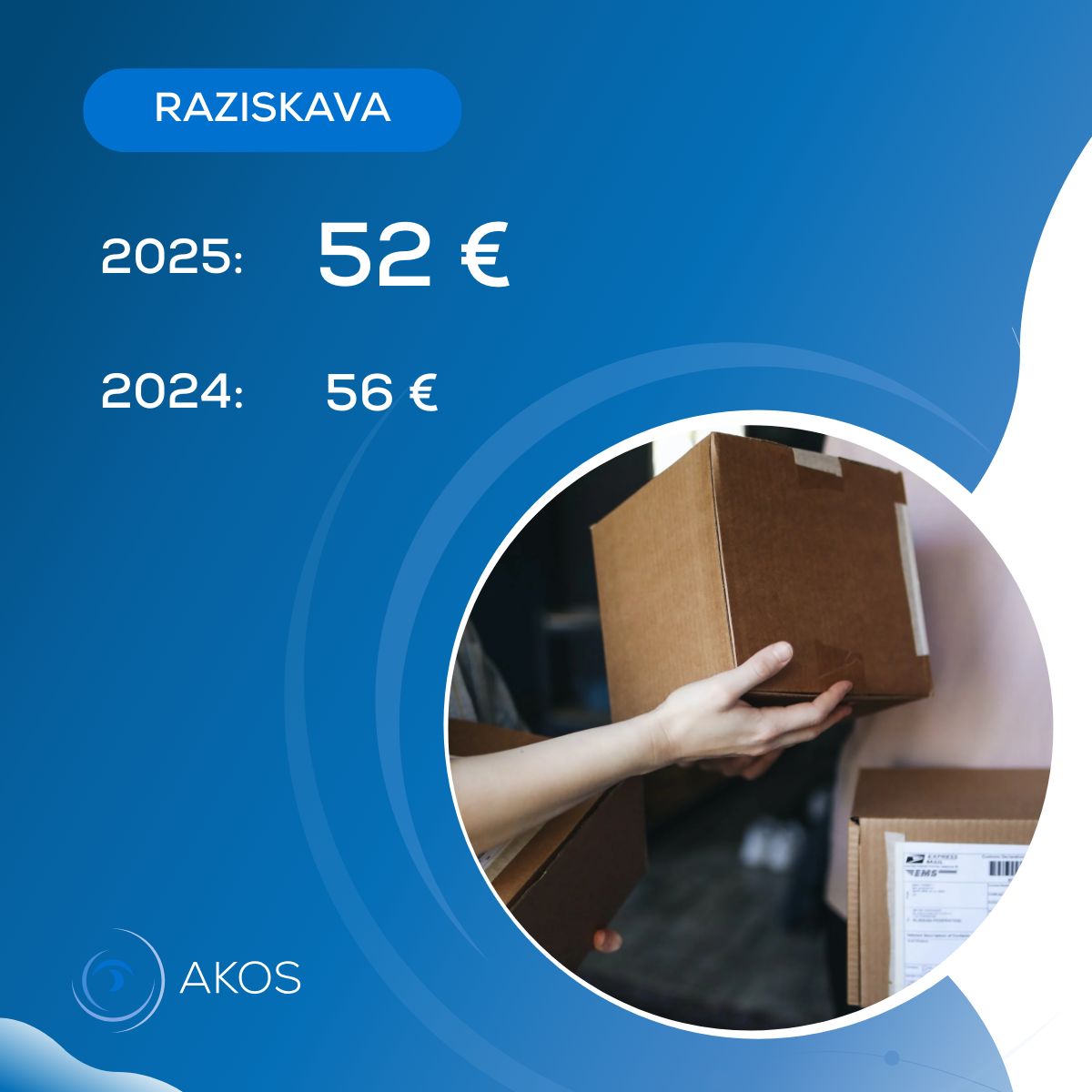
A survey on users' online shopping habits showed that frequent internet users spent an average of €52 on an online purchase. In total, they make an average of 2 purchases per month. Respondents in 2025 therefore spent slightly less money on online shopping than the year before, when frequent online shoppers spent an average of €56 per purchase. However, frequent shoppers spent an average of €323 on all purchases in the three months before the survey, while in 2024 they spent slightly more, €361.
The most frequent purchases were made in Slovenian online shops. Clothing and footwear are even more frequently purchased by frequent online shoppers than in previous surveys, accounting for 67% of all purchases, followed by cosmetics and sports and leisure products.
More and more online purchases are made over the phone, with home delivery being the most preferred method
The phone is becoming the main tool for us to "enter" shops and shop. The proportion of respondents making purchases on their mobile phone has increased to 61%, with an even higher figure of 84% for the 18-44 age group and 54% for the older population. Some gender differences in purchasing habits remain, with 68% of women saying they make purchases on the phone, while men use the computer to a slightly greater extent for online purchases, at 58%.
Regardless of the profile of users, price remains a key factor both in the purchase decision and in the choice of delivery partner, which is also reflected in expectations regarding delivery conditions.
As many as 96% of users expect free delivery for purchases over € 50, and the majority want delivery in one consignment. Home delivery is the most frequent choice of the surveyed population, with 77% of respondents saying so, even more than in the previous survey when 71% said so. Compared to previous surveys, there is a slight increase in the choice of parcel machine delivery, reaching 14%, compared to 12% in the 2024 survey. The use of parcel machines is higher among younger users up to 44 years old, with 23% of respondents in this age group using them. This indicates a gradual increase in the importance of flexible forms of parcel collection, especially in urban environments and among users who pay more attention to the time flexibility of delivery. Older and rural residents are more likely to choose home delivery, at 83%.
Satisfaction with delivery has improved in 2025 compared to previous measurements. The delivery satisfaction index stands at 84.6, compared to 82.4 the previous year. The survey respondents gave the highest ratings to the delivery service providers Pošta Slovenije, GLS and DPD.
10% of users had made a complaint or complaint about delivery problems, and about half of these were satisfied with the subsequent handling of the complaint. However, occasional users in particular are the least satisfied with the final resolution of the complaint process, so complaints remain an important challenge for service providers.
The results of the survey, which involved a total of 1000 respondents, confirm that online shopping remains stable and widespread. The full results are available here.
On the occasion of Safer Internet Day, the Agency adds that it is always active in promoting new technologies, as well as actively raising awareness on the safe use of new technologies, applications, social networks and the web, and for the 6th consecutive year it is managing the Media and Information Literacy (MiPi) portal. The portal focuses in particular on the protection of minors online and the risks of using online platforms, while also addressing their guardians. The Agency also explains the measures being developed at European or national legislative level to make them easier for users to use, to make them safer online, to shop online and to participate in the digital world in general.
