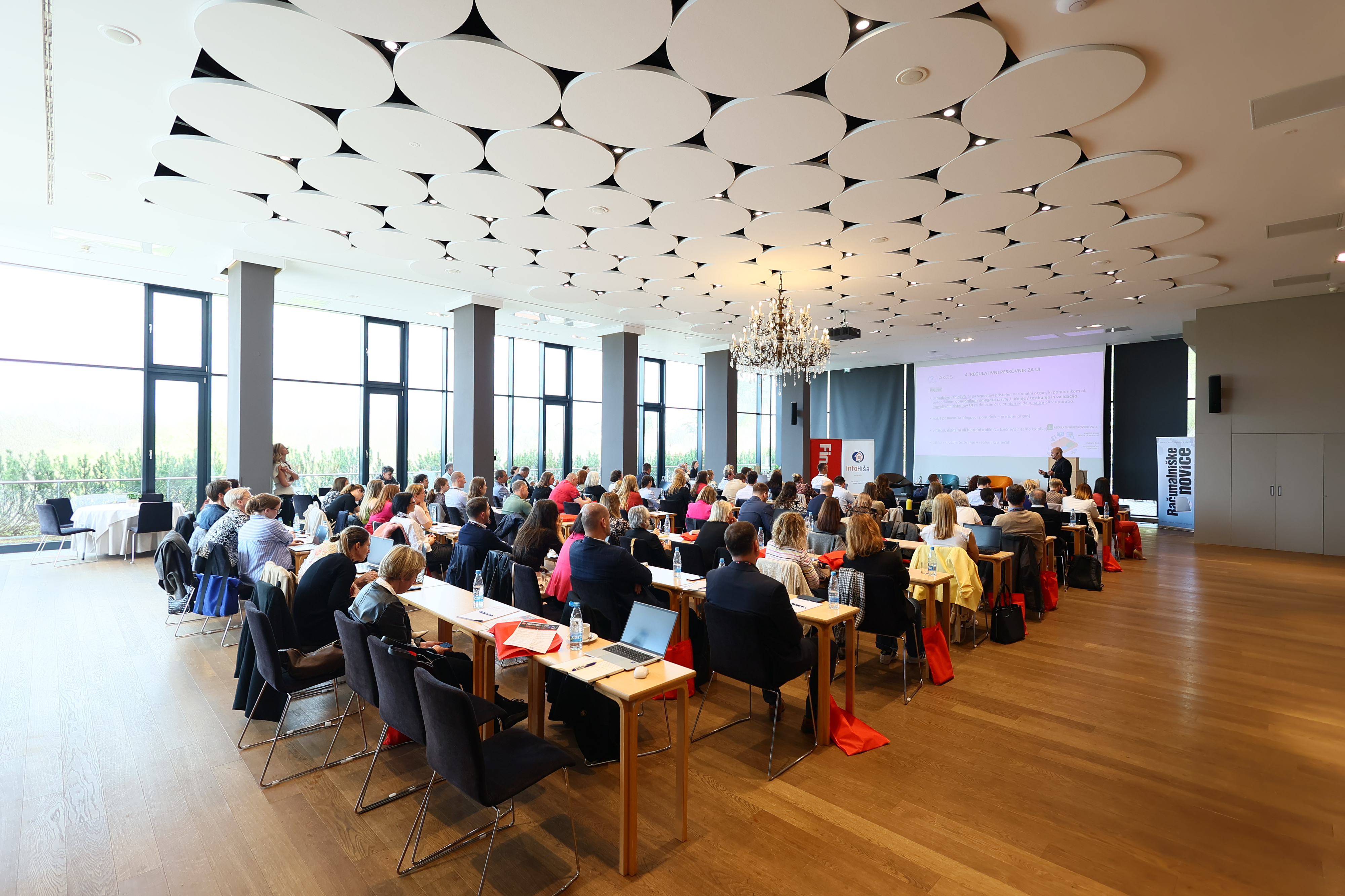

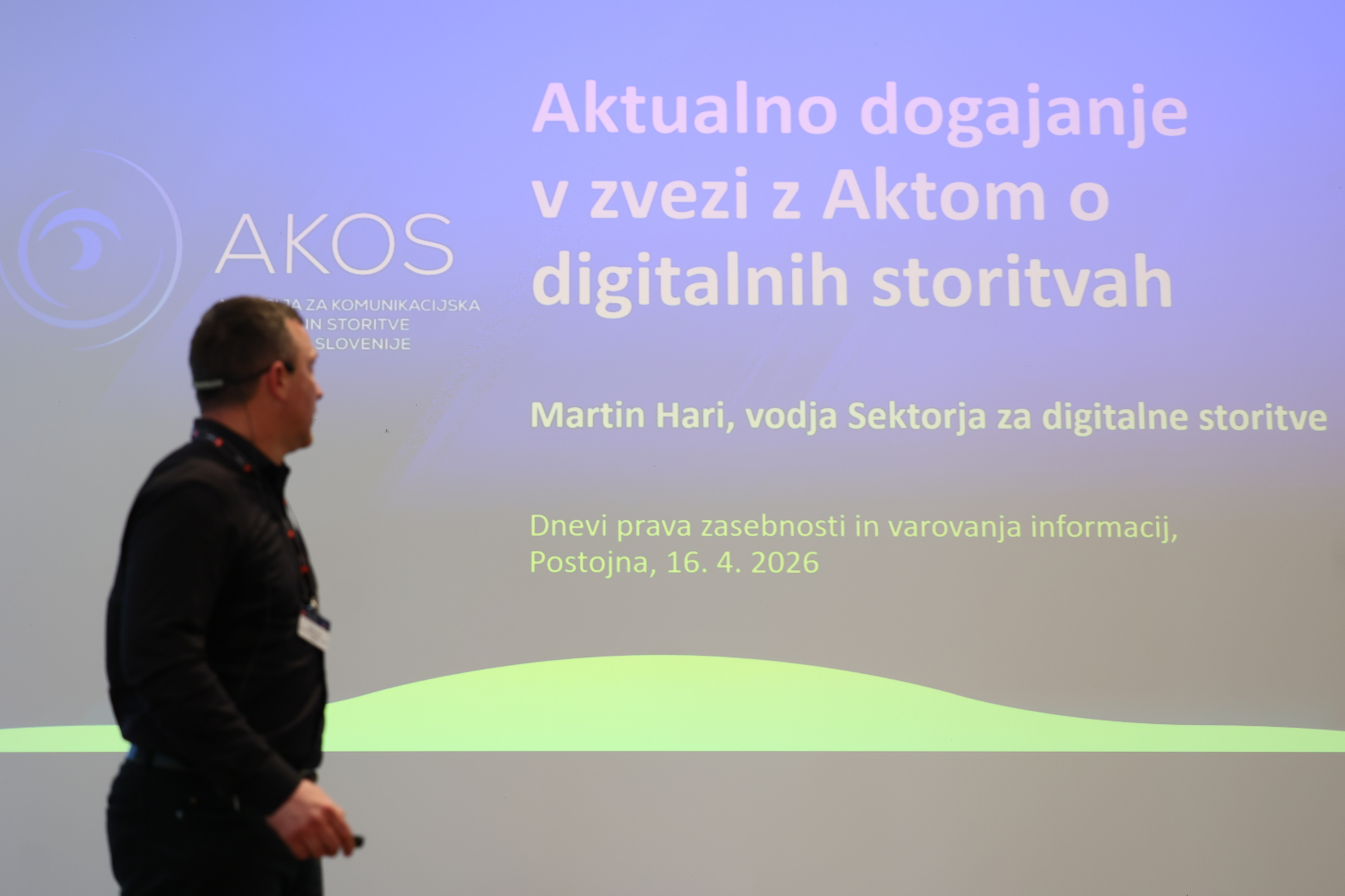
Representatives of the Slovenian Agency for Communications Networks and Services (AKOS) presented key activities and next steps in the enforcement of European rules in the field of artificial intelligence and digital services at the 12th Privacy Days conference. The message of the conference is clear: regulation of advanced technologies is becoming a reality and Slovenia is actively preparing for it.
Artificial intelligence: from rules to practice
Igor Žorga presented the field of AI regulation at the conference, stressing that the Agency is taking on a multi-faceted role in the implementation of the Artificial Intelligence Act (AI Act). The challenges and changes presented by the AI Omnibus were also highlighted.
In addition to overseeing certain high-risk AI systems, AKOS will also act as a Single Point of Contact (SPOC) for cooperation with other Member States and EU institutions. Another important focus is the establishment of a central entry point for businesses, in particular SMEs, and innovators, who will be able to obtain guidance and answers from the Agency on compliance with the new legislation.
Mr Žorga also highlighted plans to set up "regulatory sandboxes" - controlled environments where companies can safely develop, test and validate their AI solutions before entering the market. This approach is intended to stimulate innovation while ensuring compliance with the rules.
It also paid particular attention to transparency requirements. These include clear labelling of systems that interact with users and the labelling of artificially created or manipulated content, including deep fakes.
Digital services: the importance of privacy protection
Martin Hari gave a presentation on the Digital Services Act (DSA), highlighting in particular the data protection and privacy aspects.
Mr Hari stressed that the DSA addresses systemic risks in the digital environment, including the proliferation of illegal content and the impact on users' fundamental rights, including the right to privacy and the protection of personal data. Another important focus is the protection of minors online, where the Regulation imposes additional requirements to ensure their safety and privacy.
He also highlighted the relationship between the DSA and the General Data Protection Regulation (GDPR), where the DSA does not interfere with existing rules, but complements them and makes several direct references to them.
Other topical issues mentioned were the procedures at European Union level and the possibility of appointing trusted whistleblowers also in the area of privacy protection.
The role of AKOS in the enforcement of the new rules is both supervisory and supportive. The aim is to create an environment that fosters innovation while ensuring a high level of user protection.
With the implementation of the AI Act and the Digital Services Act, Slovenia is entering a new phase of digital development where transparency, accountability and security will be key elements of the digital space.
More information on the new rules and answers to frequently asked questions can be found on the AKOS website in the Frequently Asked Questions and Answers (FAQ AI) section and in the(FAQ DSA)
