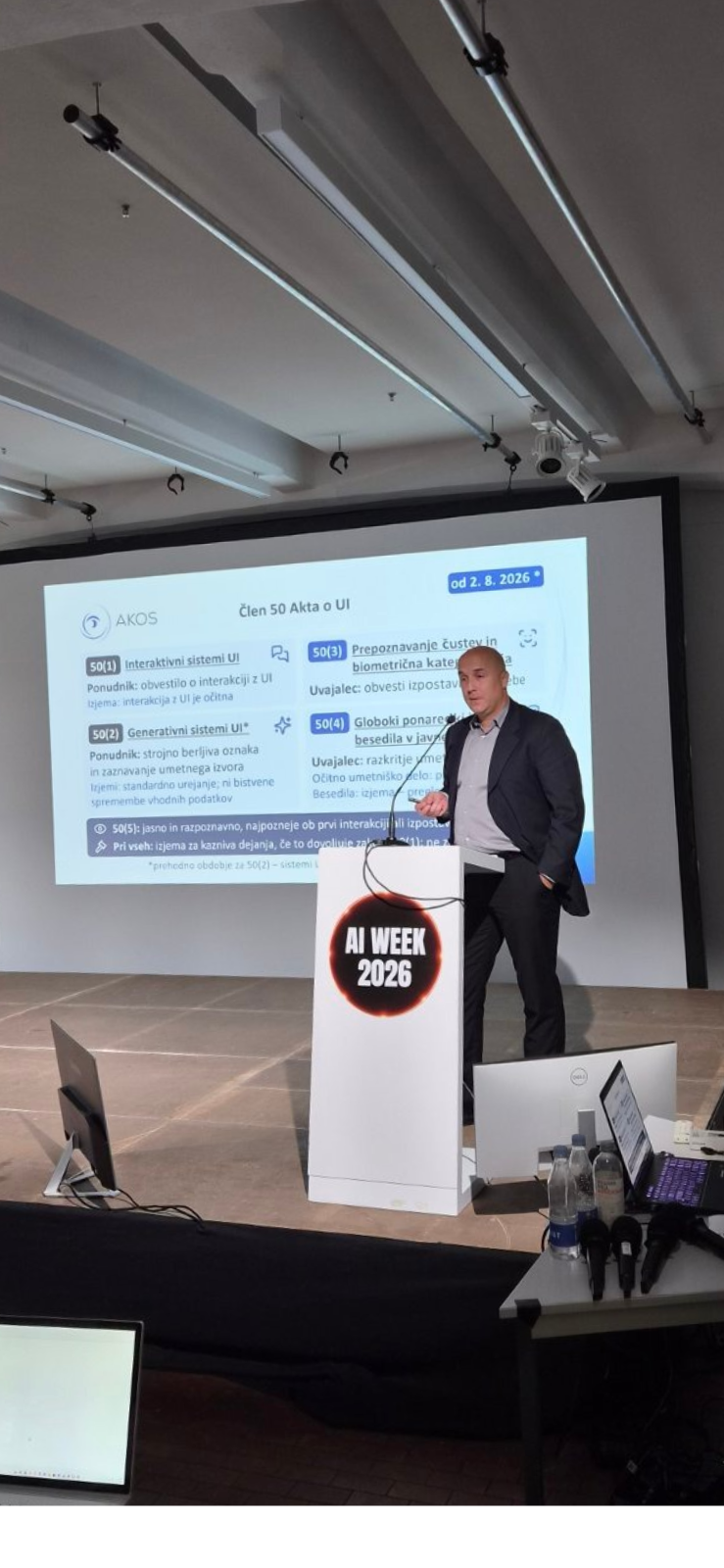
The transparency obligations set out in Article 50 of the AI Act shall apply from 2 August 2026. They relate to interactive AI systems, systems for generating synthetic content, systems for emotion recognition and biometric categorisation, as well as deepfakes and certain texts created or adapted using AI that are published to inform the public about matters of public interest.
“Transparency is not merely a formal requirement. Users must know when they are interacting with an AI system and when the content they are viewing has been artificially generated or modified. Such information must be provided clearly, in a timely manner and in a way that the user can understand,” emphasised Igor Žorga.
In the case of AI systems designed for direct interaction with people, providers must ensure that the user is informed that they are communicating with an AI system. The notification must be clear, recognisable and accessible, and provided no later than at the time of the first interaction. A mere reference in the terms of use or technical documentation does not, as a rule, ensure that the user is adequately informed.
Specific requirements also apply to systems that generate synthetic sound, images, video or text. Their providers must ensure that the outputs are labelled in a machine-readable format and can be recognised as artificially generated or manipulated. Technical solutions must, as far as is technically feasible, be effective, interoperable, robust and reliable. For systems placed on the market before 2 August 2026, a transitional period until 2 December 2026 is provided for compliance with this obligation.
Operators of systems for emotion recognition or biometric categorisation must inform individuals exposed to such a system of how it works. In the case of deepfakes, it must be clearly disclosed that the image, audio or video content has been artificially created or manipulated. The AI Act also stipulates a disclosure obligation for texts created or modified using AI that are published for the purpose of informing the public about matters of public interest. An exception is possible, amongst other things, where the text has been appropriately fact-checked and a natural or legal person is editorially responsible for its publication.
‘Providers and implementers of AI systems must first correctly define their role and ascertain which obligations apply to them. They must then translate the legal requirements into specific technical and organisational procedures, ranging from how users are informed to the labelling of content and the documentation of measures taken,” explained Žorga.
AI WEEK 2026 takes place from 3 to 5 November 2026 and brings together experts, companies, researchers and institutions in the field of the development, use and regulation of artificial intelligence.
